
PAX wardrobes: fixings and walls
Do PAX wardrobes need fixing to the wall?
Yes. IKEA's UK product page says: "This furniture must be fixed to the wall. Different wall materials require different types of fixing devices." It also carries a tipping-hazard warning that the product "must be securely anchored". A tall frame with nothing holding it to the wall can tip.
The second sentence of that safety text is the part that matters in a Manchester house. The right fixing depends on what your wall is made of, and you often cannot tell by looking. This guide covers the common wall types, what to check before you drill, and how we fix a run.
Send photos of the wall, the ceiling height, your postcode and your IKEA planner link if you have one.
Rated 5.0 from 475 reviews on Taskrabbit, across all jobs, and 5.0 on Google from 8 reviews.
Why the frames have to be fixed
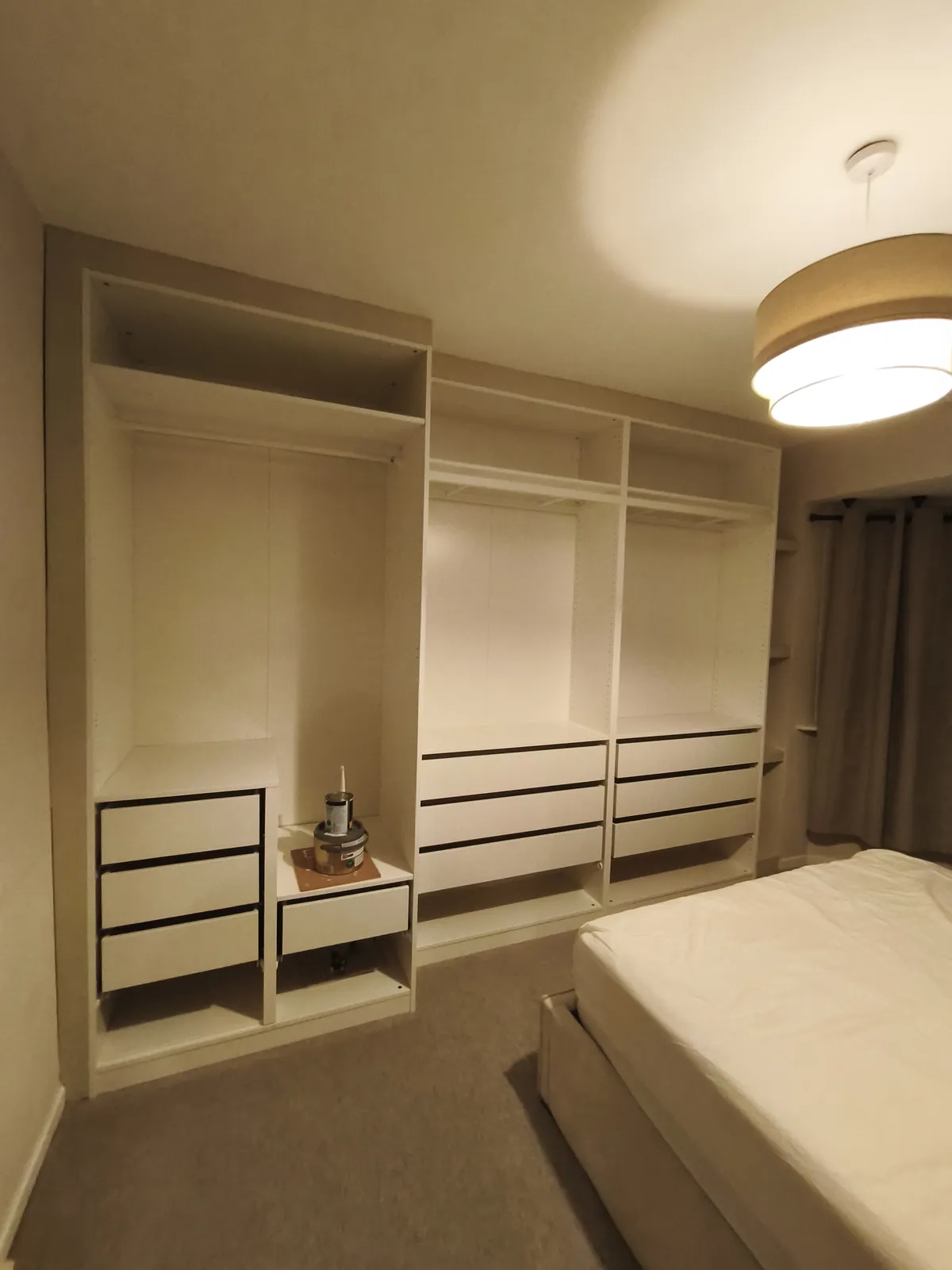
PAX frames come in two heights, 201 cm and 236 cm. They are tall and narrow, and the weight sits high once the doors and the rails are loaded. A child pulling on a drawer or a door, or a heavy pull on a rail, can tip an unfixed frame forward.
IKEA's page for the 236 cm frame says it "Comes with two different fittings so that you can attach it securely to the wall". That tells you the fitting is part of the design, not an extra.
Solid brick or block
This is the easiest wall. You drill, fit a wall plug and drive a screw through the frame into it. The plug and screw must be long enough to bite into the masonry past the plaster, and the drill bit must match the plug.
Many older Manchester houses are brick under plaster. Many newer ones use block. Both take masonry fixings, though soft block needs more care to avoid crumbling the hole.
Plasterboard on timber studs
Stud walls are common for loft rooms, extensions and partitions. The board itself will not hold a tall frame. The screw has to go into a timber stud behind it, or you use a fixing made for plasterboard that spreads the load.
Finding the studs takes a detector or careful tapping, and then a check that you are on the timber and not beside it. A stud wall is also where pipes and cables run, so the checks in the next sections matter more here.
Dot and dab plasterboard
On many masonry walls the plasterboard is stuck on with dabs of adhesive. Tap it and it sounds hollow. Behind the board is a cavity, and the board is not a fixing point.
A short screw into dot and dab board will not hold a frame. The fixing has to pass through the board and the gap and reach the block or brick behind it. That needs a longer fixing chosen for the depth of the cavity, which is why we find out what the wall is before we pick one.
Older lath and plaster walls
Older houses can have plaster on thin timber strips, called laths, instead of board. The plaster is brittle and crumbles around a hole. Fixing into it needs a different approach: find the timber behind, or go through to the brick or the structural timber.
We look at these walls one by one. If a wall will not take a safe fixing, we say so before the frames are built.
Check for pipes and cables before you drill
Pipes and cables run up and across walls, often near sockets, switches and radiators. A hole through a cable or a pipe is a bigger problem than a wobbly wardrobe.
Use a detector made for the job, and treat the lines above and beside a socket as likely routes. If you are unsure, leave that spot and fix elsewhere along the frame. Anything that involves moving a cable is work for a registered electrician.
- Scan the drilling spots, not just the wall in general.
- Check the other side of the wall if it is a kitchen, bathroom or airing cupboard.
- Drill a small pilot hole first and stop if the drill hits something unexpected.
Skirting boards, uneven walls and the order of work
A frame cannot sit flat against the wall above a skirting board that sticks out. Either the skirting is cut back behind the run, or the frame is packed forward and the gap is trimmed. Which one is right depends on the room and how deep the skirting is. Our guide to measuring the room for PAX covers what to note before you order.
Walls lean and bow, so we level each frame on its adjustable feet first. Then we fix it to the wall, packing the gap behind where the wall is out. Only then are the frames joined to each other. Fixing before levelling pulls the frame to follow the wall, and the doors will not hang true.
If you rent
The holes are small and can be filled when you leave. Agree it with the landlord first, in writing if you can. We do not advise skipping the fixing to avoid a conversation, because the tipping risk does not depend on who owns the wall.
What we do on a fitting
We check the wall type, the pipes and cables, and the skirting. We level the frames on their feet, fix each one with a fixing chosen for that wall, join the frames to each other, then add fillers and trims. Our IKEA PAX wardrobe fitting page shows how a job runs.
Plain assembly with no trims includes the wall fixing too. See flat-pack assembly if you only need the units built and fixed. For the finishing work that makes a run look built in, read how to make PAX look built in.
Send a photo of the wall and the skirting on WhatsApp and we will tell you what the fixing involves.
Quick questions
Do IKEA PAX wardrobes have to be fixed to the wall?
Yes. IKEA's UK page says the furniture "must be fixed to the wall" and warns that it must be securely anchored because of the tipping hazard. We fix every frame we fit.
Are the brackets in the box enough for every wall?
IKEA supplies fittings, but the right fixing depends on the wall. IKEA's own text says different wall materials need different fixing devices. That is why we check the wall first and choose the fixing to suit it.
Can PAX be fixed to a plasterboard wall?
Yes, but the board alone will not hold a tall frame. The screw has to reach a timber stud, or you use a fixing made for plasterboard. On dot and dab board, the fixing has to reach the block behind the cavity.
What about the skirting board?
The frame cannot sit flat against the wall above a skirting that sticks out. We either cut the skirting back behind the run or pack the frame forward and trim the gap. The choice depends on the room.
Can I fix PAX to the wall in a rented flat?
The holes are small and can be filled afterwards. Agree it with the landlord first. We do not advise leaving the wardrobe unfixed.
Send us the job, get a price
Message photos, rough measurements and your postcode. We aim to reply with a price the same day.
Related services
IKEA PAX wardrobes
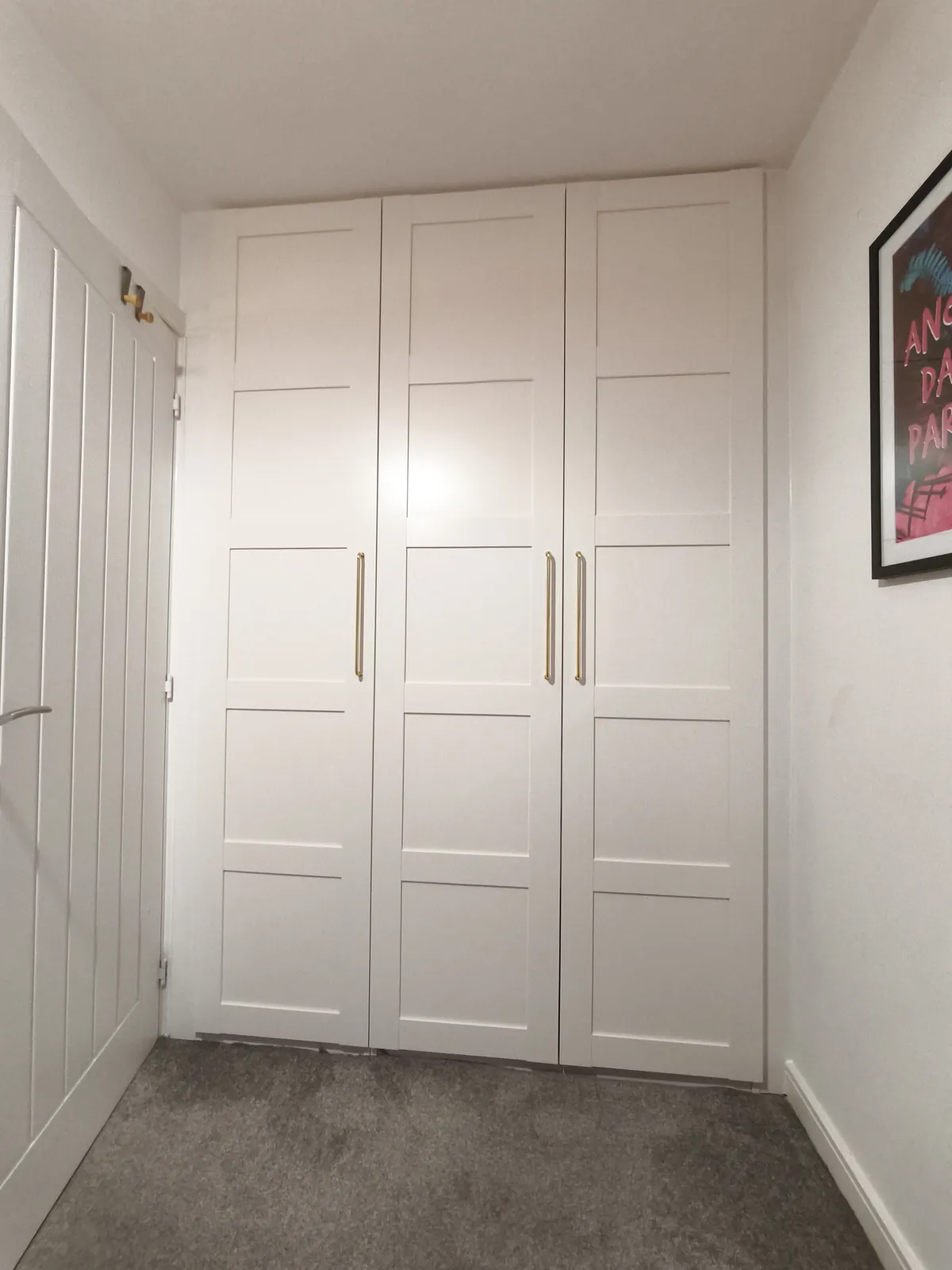
IKEA PAX wardrobes fitted to look built in: tight to the walls and ceiling, with trims, filler panels and neat finishing.
Read more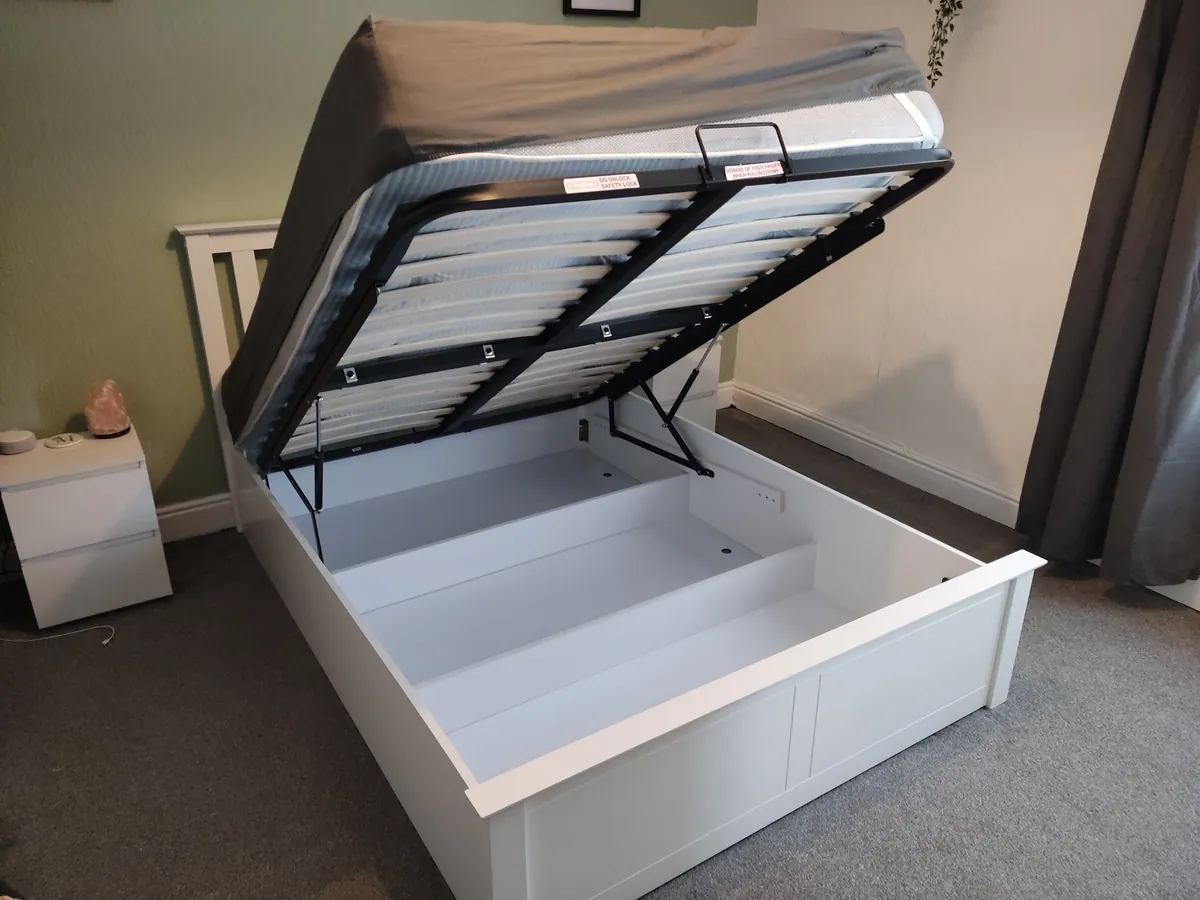
IKEA & flat-pack assembly
Wardrobes, beds, desks, drawers and storage assembled properly and secured to the wall where needed.
Read more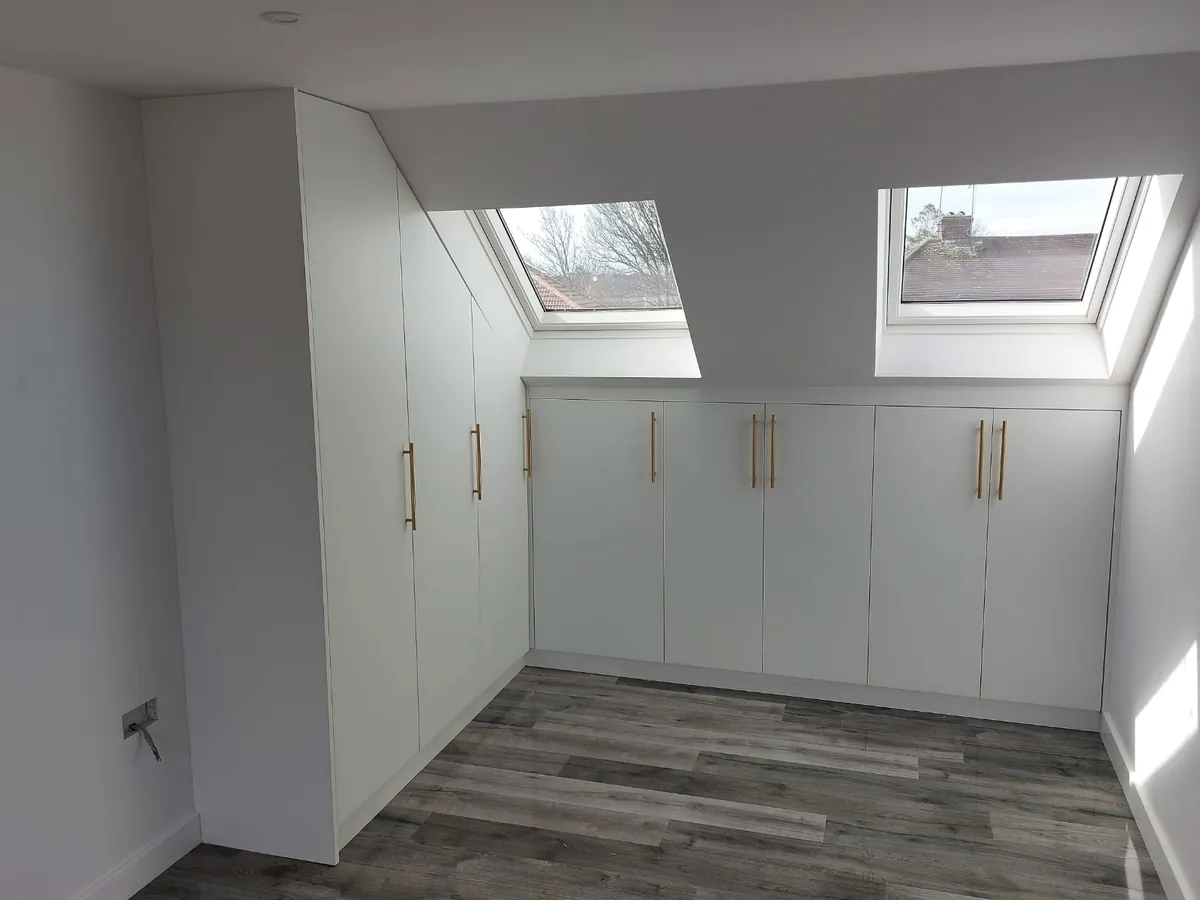
Loft & alcove wardrobes
Wardrobes that follow a sloping ceiling or fill an alcove, with eaves cupboards and drawers where the roof comes down.
Read more
More guides
- IKEA PAX or bespoke fitted wardrobes: how to choose
- Dry fit or full fit kitchen: what each one covers
- How to make IKEA PAX wardrobes look built in
- TV wall mounting cost: what changes the price
- IKEA PAX fitting cost: what changes the price
- How to measure a room for IKEA PAX wardrobes
- PAX sliding doors or hinged doors: which to choose